Magic and Wizard Words in English for Kids
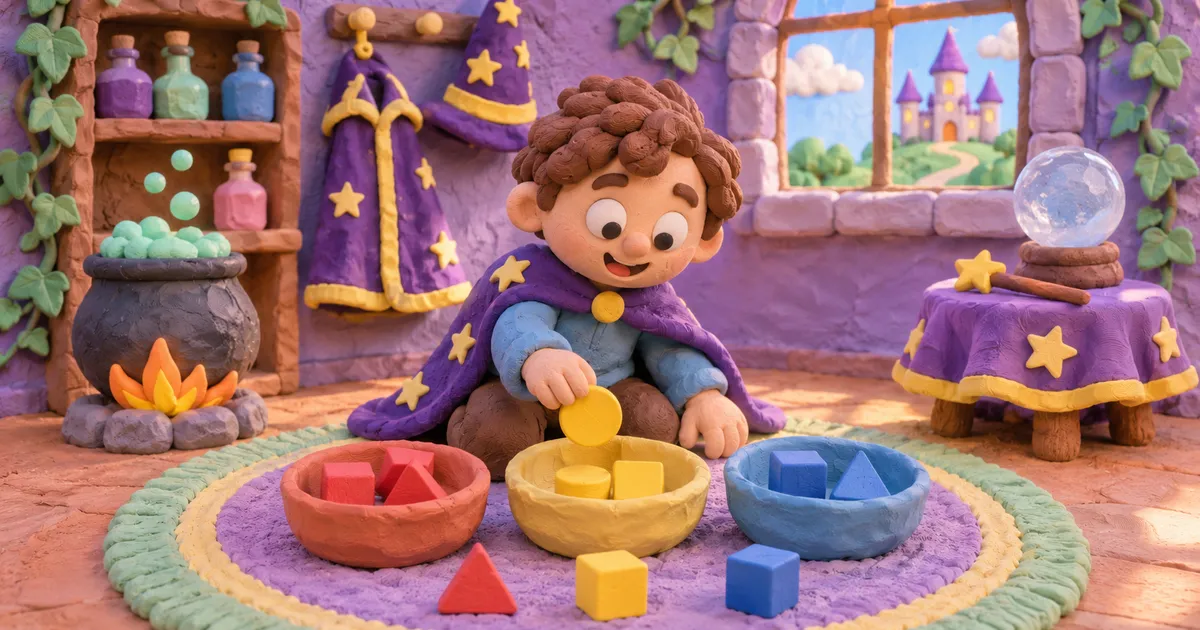
Six to eight magic words and two short phrases fill one focused session. Magic and Wizard Words in English for Kids: Vocabulary and Activities gives your child language they can act out: wand, spell, potion, vanish, mysterious, and “What does this spell do?” This mix includes fantasy nouns, action verbs, describing words, and story phrases. Connect each item to a picture, movement, or sentence. Children who speak two or three languages may know the idea before the English label. Let them link it briefly, then return to English. Aim for playful use, not a long list learned in one sitting.
Build a Useful Set of Magic Words
A small, varied word set gives children more to say than a long list of objects. In Magic and Wizard Words in English for Kids: Vocabulary and Activities, nouns supply characters and props, verbs create action, and adjectives add detail. Complete phrases help children use new words at once.
The groups below can be taught separately or mixed into one story. Begin with words your child can show through a picture, toy, gesture, or drawing.
Teach meaning before spelling. Show a wand, make a waving motion, and say, “Wave the wand.” Then change one part: “Wave the broomstick” or “The wizard waves the wand.” This shift shows how English sentences are built without a grammar lecture.
Put the Words into Context
A word earns its place when it answers a question or completes an action. Model short sentences: “The wizard carries a silver wand,” “The dragon guards the tower,” “The potion smells strange.” Your child replaces one word while keeping the frame: “The fairy carries a golden key.”
Questions create a reason to speak. Ask, “Who lives in the castle?”, “What is inside the bottle?”, or “Why is the dragon hiding?” Accept a short answer, then expand it together. If your child says, “Potion,” respond, “Yes, a green potion is inside the bottle.”
Older children link events with because, but, and if: “The spell failed because the wizard forgot a word.” “The door looks ordinary, but it is enchanted.” “If the crystal glows, the hidden path will appear.” These sentences turn fantasy vocabulary into wider practice.
Choose Activities for Your Child’s Age
For ages four to six, Magic and Wizard Words in English for Kids: Vocabulary and Activities works through movement and matching. Place three picture cards on the floor. Say “wand,” “dragon,” or “castle,” and let your child touch the right card. Next, give an action: “Fly,” “mix,” or “whisper.” Keep each round brief and repeat familiar words.
For ages seven to nine, use guessing games and story chains. One person describes a hidden card without naming it: “It is a drink. It can be purple. A wizard makes it.” The other guesses potion. In a story chain, each player adds one sentence that reuses a word from the previous turn.
For ages ten to fifteen, add choices, motives, and consequences. Ask your child to design a spell with a name, purpose, ingredients, and one unwanted effect: “This spell makes objects invisible, but it lasts only ten minutes.” The fantasy setting supports richer verbs and precise descriptions without making the task childish.
Practise Through Play and Recall
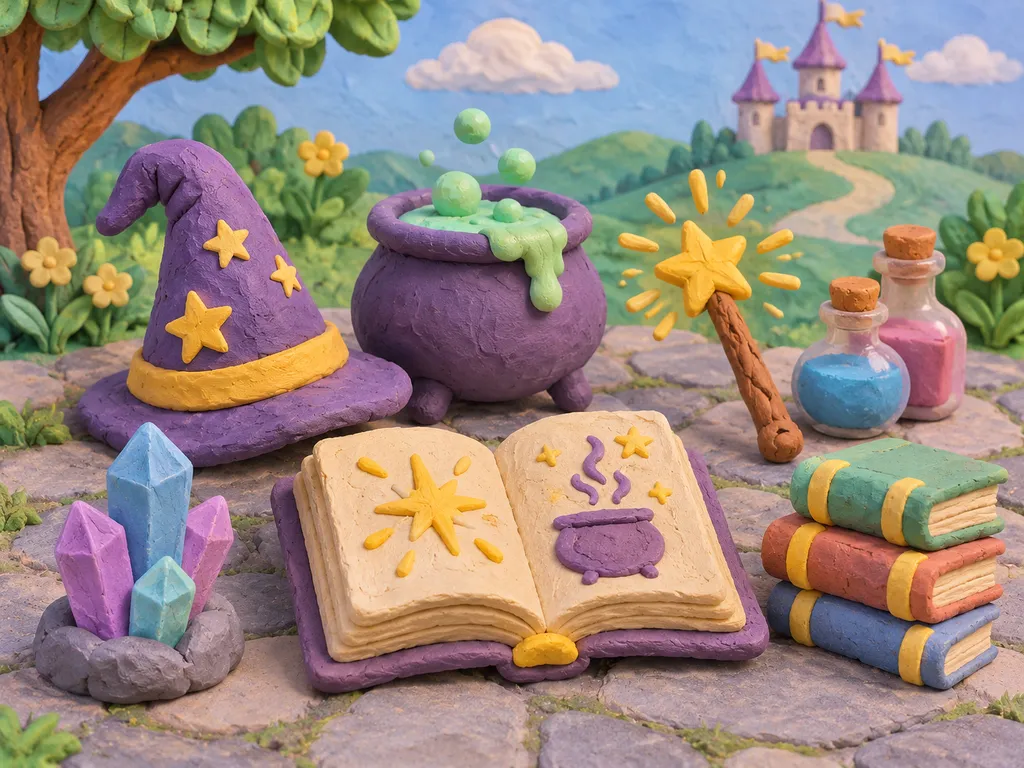
Keep Magic and Wizard Words in English for Kids: Vocabulary and Activities in short, repeatable routines. Sort cards into people, objects, actions, and descriptions. Play “What changed?” by removing one card. Ask your child to name the missing item and use it in a sentence before it returns.
Five-minute Spell Lab
Choose one character, one object, and one action. Your child makes a sentence with all three: “The fairy waves the crystal.” Add a describing word, then a result: “The brave fairy waves the blue crystal, and the door vanishes.” Change one card and build a new sentence.
Finish with recall, not another explanation. Put the cards away and ask for three words from the game. The next day, ask again before showing pictures. Across LearnLink lessons, our tutors revisit language in new contexts so children learn to retrieve it, not only recognise it.
Correct Common Word and Grammar Mix-ups
Keep related meanings separate. A wizard is a character, a wand is an object, and a spell is a set of magic words or an act of magic. A potion is a prepared liquid. Ask your child to draw or act out each meaning instead of giving a long definition.
Some forms need direct practice. The past form of cast is still cast: “Yesterday, the wizard cast a spell.” The plurals are fairies and witches, not fairys or witchs. Contrast magic in “a magic wand” with magical in “a magical place.”
Pronunciation differs across English-speaking regions. A child might hear different vowel sounds in potion or castle; that does not make one accent wrong. Correct only what blocks understanding, and model the word once in a full sentence. Constant interruption makes an imaginative speaking game feel like a test.
- Practice five minutes daily mixing up "wand" and "want" until your child hears the difference.
- Read one magic-themed picture book aloud tonight, pausing to repeat tricky wizard vocabulary.
- Create flashcards for three commonly confused word pairs, like "spell" and "spill".
- Play a quick game asking your child to correct silly spell-casting sentences you say aloud.
- Review today's new words together before bedtime using simple magic-themed example sentences.
When a word has several meanings or pronunciations, Cambridge Dictionary is a useful check before turning it into child-friendly examples.
Frequently Asked Questions
How Many Magic Words Should My Child Learn at Once?
Begin with six to eight words and two useful phrases. Magic and Wizard Words in English for Kids: Vocabulary and Activities should feel manageable enough to use within the same session. Add new items when most of the first set can be recalled without pictures. A child who enjoys longer stories may handle more; a new learner needs fewer words and more repetition.
Is Magic Vocabulary Suitable for a Multilingual Child?
Yes, provided the activity respects the languages your child uses. They may name a fantasy object in another language before finding the English word. Acknowledge the connection, supply the English model, and invite a short English sentence. Translation need not be banned. The goal is to make the label clear, then practise retrieving it in English.
What If My Child Does Not Enjoy Fantasy Stories?
Use only the parts that interest your child, or move the words into another setting. An invisible object can appear in a detective game, a mysterious box in an adventure, and a potion in an imaginary science mixture. Avoid frightening creatures or spell play if they conflict with your child’s preferences or family traditions. Vocabulary practice does not require belief in magic.
How Can I Check Whether the Words Have Been Remembered?
Check whether your child can understand, recall, and use each word. First, ask them to point to the correct picture. Later, remove the pictures and ask for the word from a clue. Finally, invite a new sentence or question. Remembering “wand” during a different game days later is stronger evidence than repeating it immediately after hearing it.
- Start with six to eight words and two useful phrases.
- Practise each word through a picture, movement, question, or sentence.
- Ask your child to recall three words after the cards are removed.
- Repeat the game on another day and use the words in a new context.
A short one-to-one lesson can show what level and pace fit your child — book a trial English lesson.
Stay updated on our latest tips and resources by following us on Instagram LearnLink.